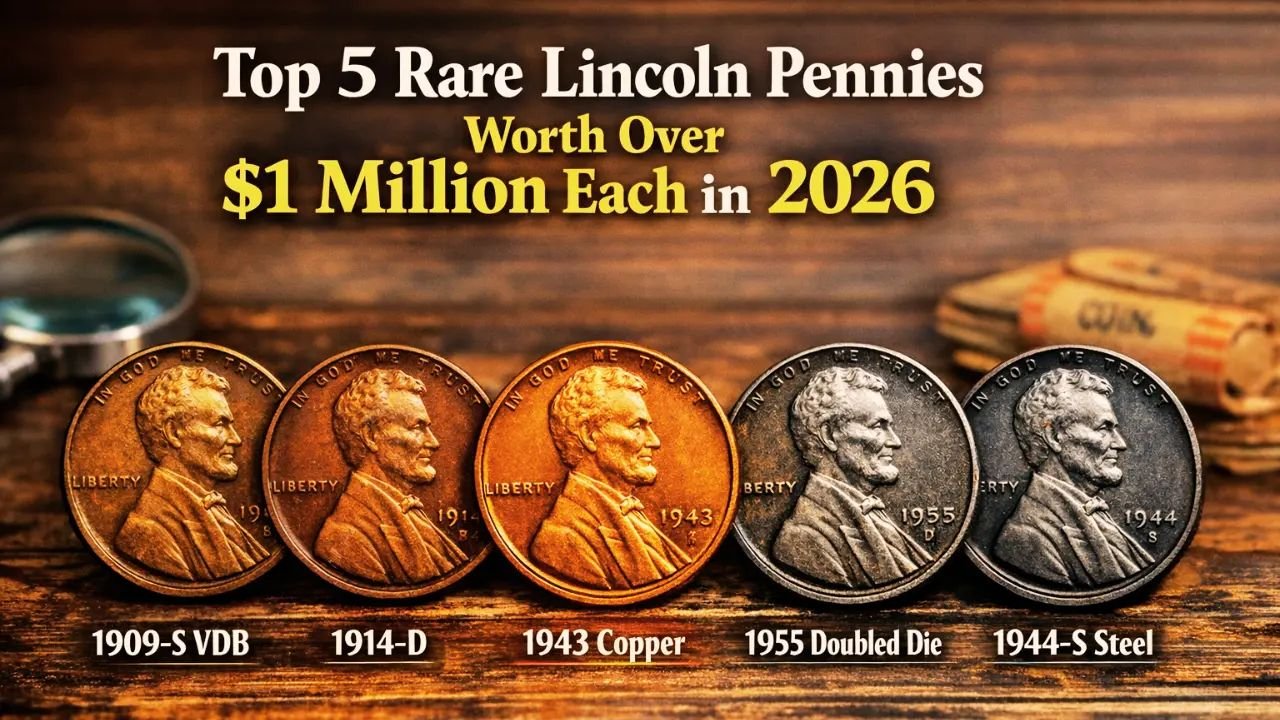
Lincoln pennies are among the most recognizable coins in American currency, yet only a select few have reached million-dollar valuations. These rare cents combine historical significance, minting anomalies, and extreme scarcity, making them coveted treasures in numismatics. While most Lincoln pennies are worth only face value, collectors and investors closely track these exceptional examples, with auctions routinely pushing prices past the $1 million mark.
1. 1909-S VDB
The 1909-S VDB penny is arguably the most famous Lincoln cent. Minted at the San Francisco Mint, it features the initials of designer Victor David Brenner on the reverse. Only 484,000 coins were produced, making it extraordinarily scarce. Near-perfect specimens have sold for over $1.5 million in recent auctions. Its allure stems from the combination of limited production, historical significance as the first year of the Lincoln cent, and the presence of the designer’s initials—a hallmark that makes it a trophy coin for serious collectors.
2. 1909-S Penny Without VDB
Shortly after the initial release of the 1909-S VDB, the VDB initials were controversially removed from circulation. A small number of these “no initials” coins entered the market, creating a rarity nearly as coveted as the original VDB version. In top condition, these pennies can achieve values above $1 million, offering collectors a unique historical anomaly that captures a story of early 20th-century U.S. Mint decision-making.
3. 1914-D
The 1914-D penny, minted in Denver, is one of the most elusive in the Lincoln series. With a mintage of just 1,193,000, it ranks among the lowest-production Denver cents. Many were lost or melted over the decades, leaving even fewer surviving examples today. Even coins in modest condition command high prices, while premium specimens have broken the seven-figure mark. Its scarcity and demand make it a cornerstone for serious Lincoln cent collectors.
4. 1922 No D
The 1922 No D penny carries a story of mystery and intrigue. During production, some Denver Mint coins were mistakenly struck without the “D” mint mark. These errors were extremely limited, making the 1922 No D one of the most sought-after Lincoln cents. High-grade examples have sold for well over $1 million, with collectors drawn to both the rarity and the enigmatic minting error, which represents a unique chapter in U.S. Mint history.
5. 1943 Copper Penny
In 1943, the U.S. Mint switched to steel pennies coated with zinc to conserve copper for World War II. However, a few copper pennies were accidentally struck, creating some of the most legendary coins in the Lincoln series. These rare 1943 copper cents are highly prized, with auction prices ranging from $1 million to $1.7 million, thanks to their extreme scarcity and historical context as wartime anomalies. They are often considered the crown jewels of Lincoln cent collections.
Million-Dollar Lincoln Pennies at a Glance
| Coin Type | Year & Mint | Estimated Surviving Population | Approx. Auction Value | Why It’s Valuable |
|---|---|---|---|---|
| 1909-S VDB | 1909 San Francisco | Very low | $1.3M–$1.7M+ | Limited mintage + designer initials |
| 1909-S No VDB | 1909 San Francisco | Extremely low | ~$1M+ | Historical removal of initials |
| 1914-D | 1914 Denver | Very low | $800K–$1.3M+ | Lowest Denver mintage |
| 1922 No D | 1922 Denver | Ultra rare | ~$1M+ | Minting error mystery |
| 1943 Copper | 1943 Various Mints | Extremely low | $1M–$1.7M+ | Wartime composition error |
Why These Pennies Command Million-Dollar Prices
Several factors contribute to their staggering value:
- Rarity: Extremely low surviving populations make them highly desirable.
- Condition: Coins graded at higher levels by professional services can exponentially increase in value.
- Historical Significance: Minting errors, wartime composition changes, and design controversies add compelling narratives.
- Market Demand: High-end collectors and auction houses consistently push prices into the seven-figure range.
The Role of Professional Grading
Organizations like PCGS (Professional Coin Grading Service) and NGC (Numismatic Guaranty Corporation) are critical in establishing authenticity and condition. Higher grades correlate with higher auction values, giving buyers confidence and driving demand. For example, a 1909-S VDB graded MS65 will sell for far more than the same coin in a lower grade.
Auction Houses and Market Trends
Reputable auction houses such as Heritage Auctions and Stack’s Bowers regularly handle these rare pennies, attracting international bidders. Demand for high-end coins has surged, often outperforming traditional investments like gold or equities in recent years. This trend underscores the enduring allure of iconic Lincoln cents as both collectible and investment-grade items.
Conclusion
The top five rare Lincoln pennies worth over $1 million are more than just metal discs—they are symbols of American history, minting quirks, and numismatic passion. Their value reflects scarcity, exceptional condition, and captivating origin stories. For seasoned collectors and enthusiasts alike, these pennies illustrate how ordinary currency can transform into extraordinary treasures.