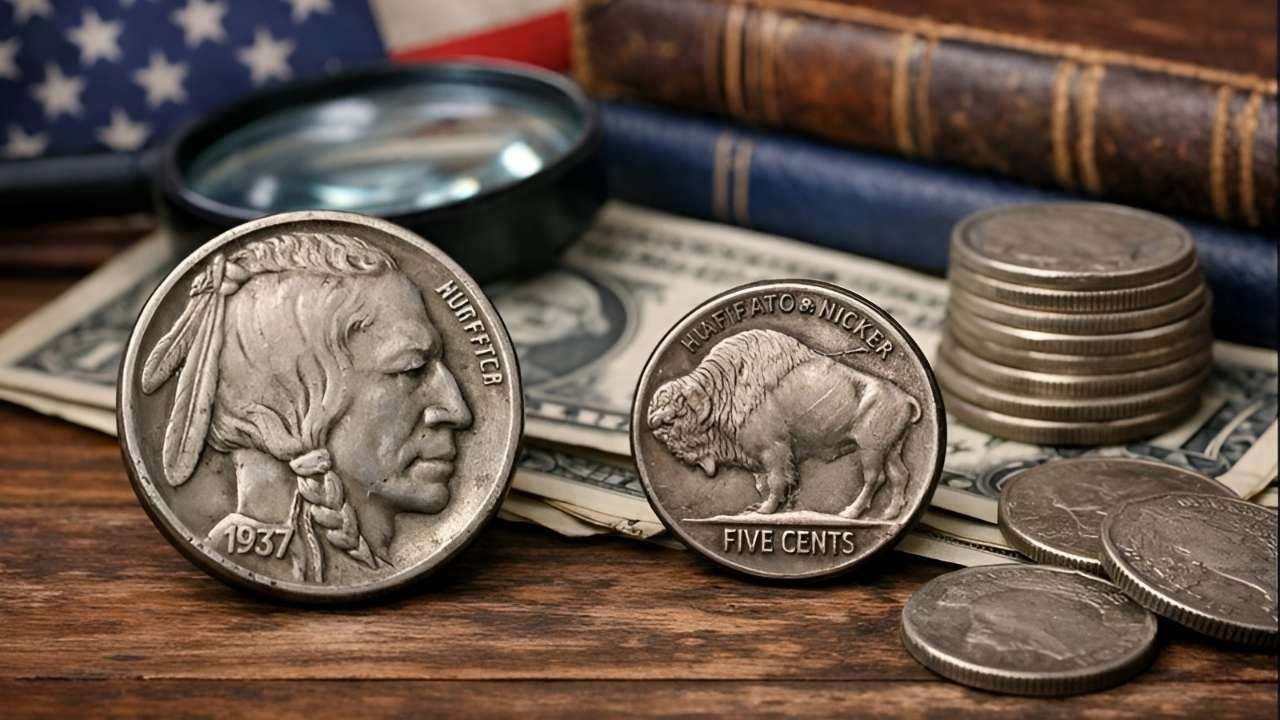
Buffalo nickels, also known as Indian Head nickels, are among the most celebrated coins in American numismatics. Minted from 1913 to 1938, these coins feature a Native American profile on the obverse and a majestic buffalo on the reverse. Designed by sculptor James Earle Fraser, the Buffalo nickel was created to honor the spirit of the American West. Today, collectors prize these coins not only for their artistry but also for their rarity and value. Certain Buffalo nickels can fetch far more than their five-cent face value, making them essential for serious numismatists.
Origins and Iconic Design
Introduced in 1913, the Buffalo nickel was part of a nationwide movement to beautify American coinage. Fraser’s design was rooted in realism: the Native American portrait is a composite of several tribal leaders, while the buffalo depicted was modeled after Black Diamond, a bison housed at New York’s Central Park Zoo. The coin’s bold design was instantly recognizable, though its raised features tended to wear down quickly in circulation, prompting design adjustments over the years.
Key Dates and Rare Varieties
Certain years and mint marks of Buffalo nickels are especially rare and highly collectible.
1913-S Type 2
A cornerstone for collectors, the 1913-S Type 2 features the denomination recessed in a mound to prevent wear, differing from the original Type 1. Produced at the San Francisco Mint, only about 1.2 million were struck. High-grade examples can sell for thousands, reflecting both scarcity and historical significance.
1918-D and 1921-S
The 1918-D is rare in higher grades due to limited surviving specimens. The 1921-S had a low mintage of just over one million coins, making it another prized collectible. Both coins demonstrate how low production numbers can dramatically influence value.
1926-S Buffalo Nickel
The 1926-S is known for its poor strike quality and limited surviving examples. Collectors actively seek this date for its challenge and rarity within the series.
1937-D Three-Legged Buffalo
Perhaps the most legendary of all, the 1937-D three-legged buffalo is an error coin created when one of the buffalo’s legs was accidentally polished off the die. Released into circulation before the mistake was noticed, this coin is instantly recognizable and commands high prices. Its unique backstory and visual anomaly make it a perennial favorite among collectors.
The Role of Condition in Valuation
Condition is critical when assessing Buffalo nickel value. The coin’s intricate design was prone to wear, and many surviving examples show significant circulation damage. Collectors prize coins with sharp details, full dates, and clear mint marks. Uncirculated examples are rare and often command substantial premiums. Professional grading services, such as PCGS and NGC, provide authentication and assign grades that help establish market value. Even relatively common dates can be worth far more if preserved in exceptional condition.
Strategies for Collecting Buffalo Nickels
Collecting Buffalo nickels requires patience, knowledge, and attention to detail. Key dates, mint marks, and error varieties should be carefully studied. While some coins may still appear in old collections or coin rolls, rarities are unlikely to be found in everyday circulation. The best sources are coin shows, auctions, and reputable dealers. Proper storage in protective holders is essential to prevent damage and maintain value over time.
Market Trends and Investment Potential
The market for Buffalo nickels is dynamic, influenced by rarity, condition, and collector demand. Circulated 1913-S Type 2 coins may sell for several hundred dollars, while mint-state examples can reach thousands. The 1937-D three-legged buffalo is particularly sought after, with values ranging from hundreds to thousands depending on grade. Other key dates, including the 1918-D, 1921-S, and 1926-S, continue to command strong prices. Following auction results and updated price guides is essential for collectors and investors seeking accurate market insights.
Historical and Cultural Significance
Buffalo nickels are more than monetary instruments—they are cultural artifacts. They reflect a period in American history when coinage was being redesigned to celebrate national identity and artistic excellence. Fraser’s design honored Native American heritage and captured the frontier spirit. The buffalo symbolized strength and resilience, connecting collectors with a broader historical narrative. This blend of art, history, and rarity is what makes Buffalo nickels so desirable.
Conclusion
Buffalo nickels are extraordinary collectibles that combine artistry, historical significance, and financial value. From the 1913-S Type 2 to the famed 1937-D three-legged buffalo, these coins continue to captivate collectors worldwide. Whether you are a seasoned numismatist or a curious beginner, understanding the history, rarity, and value of Buffalo nickels transforms a simple hobby into the pursuit of extraordinary treasures. Each coin tells a story of America’s past, making them timeless symbols of heritage, art, and investment potential.