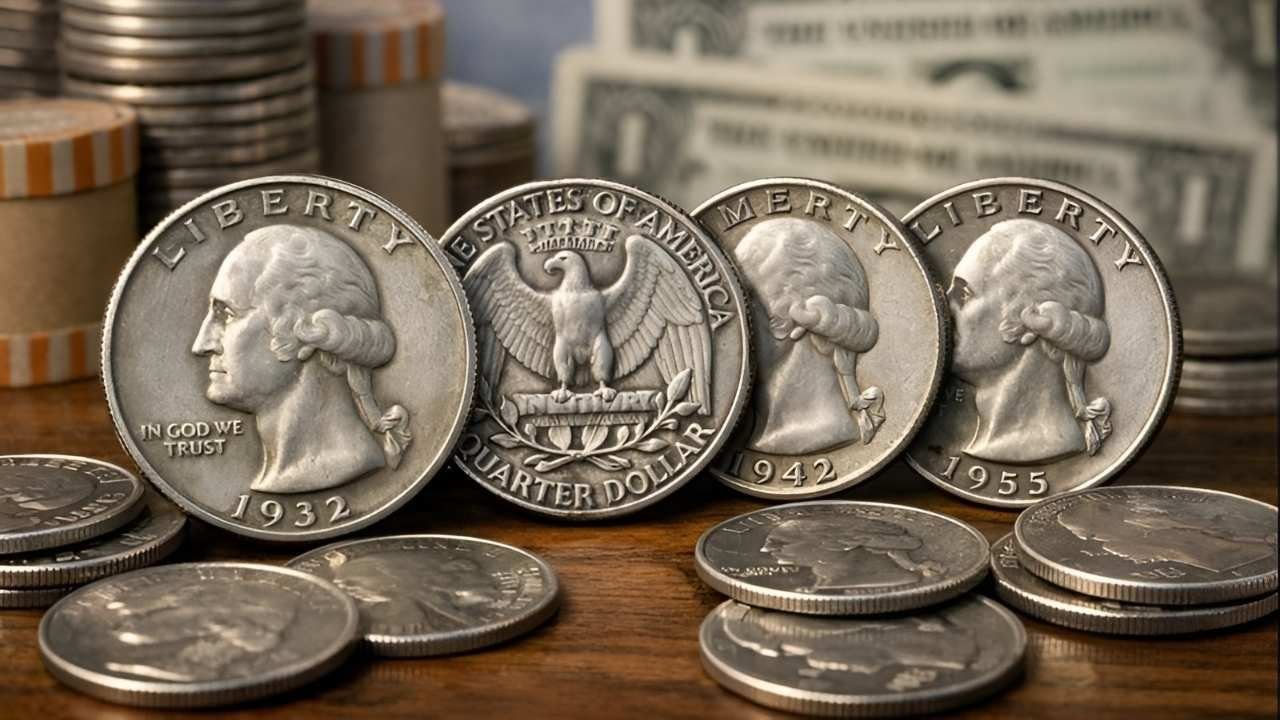
The Washington quarter has been a cornerstone of American currency since its debut in 1932, created to commemorate the 200th anniversary of George Washington’s birth. Designed by John Flanagan, this iconic coin has circulated for nearly a century, yet not all quarters are created equal. Certain years, mint marks, and varieties stand out as rare treasures, capable of turning ordinary coins into highly valuable collectibles.
Key Factors That Determine Value
Several factors influence the value of a Washington quarter. The year of issue is crucial, as some years saw much lower mintages than others. Mint marks—indicating production at Philadelphia, Denver, or San Francisco—also play a significant role, with Denver and San Francisco coins often produced in smaller numbers.
Condition is another major factor. Coins in pristine, uncirculated states are far more valuable than worn examples, while grading by professional services like PCGS or NGC can significantly enhance a coin’s market appeal. Finally, error varieties, including doubled dies, off-center strikes, and missing mint marks, can make a quarter exceptionally rare and highly sought after.
Legendary 1932-D and 1932-S Quarters
The 1932-D and 1932-S quarters are among the most coveted in the series. Minted during the first year of the Washington quarter, the Denver issue saw a mintage of just over 436,000 coins, while San Francisco produced only about 408,000. Surviving examples are exceedingly rare, and in high grades, these coins can fetch tens of thousands of dollars. For collectors, discovering one of these coins—even in circulated condition—is akin to finding a hidden treasure.
Rare Varieties and Error Coins
Beyond key dates, error coins add another layer of intrigue. The 1934 doubled die obverse, for instance, features noticeable doubling in the lettering and George Washington’s profile, while the 1943-S doubled die obverse is similarly prized. Modern errors, such as off-center strikes or missing mint marks, also command high premiums. Each error tells a story of the minting process and offers collectors a unique piece of numismatic history.
The Impact of Silver Content
Washington quarters minted before 1965 were composed of 90% silver, giving them intrinsic value beyond their face value. Even common dates from the 1940s and 1950s can be worth several dollars each simply for their metal content. Collectors, however, pay additional premiums for coins in excellent condition or with rare mint marks. Silver quarters remain highly appealing to both collectors and investors due to their combination of historical and material value.
Notable Quarters from the 1940s and 1950s
While the 1932-D and 1932-S remain legendary, other mid-century quarters also carry significant value. Coins like the 1940-D, 1950-D, and 1955-D are sought after for their relatively low mintages. In higher grades, these coins can fetch hundreds of dollars, making them attractive targets for collectors aiming to build a comprehensive collection.
Modern Rarities and State Quarters
Even recent issues can be valuable. The 1970-S proof quarter struck on a silver planchet is a rare error, often selling for thousands. Quarters from 1982 and 1983 are notable because no official mint sets were produced, making high-grade specimens scarce. Certain state quarters with minting anomalies—like doubled dies or off-metal strikes—have also become desirable collectibles, showing that valuable coins are not limited to early issues.
Market Trends and Pricing
The Washington quarter market is dynamic, with prices influenced by rarity, condition, and demand. A circulated 1932-D might sell for a few hundred dollars, while a mint-state example can reach tens of thousands. Error coins often command premiums, and pre-1965 silver quarters continue to trade above face value. Collectors should always reference updated price guides and auction results to stay informed about current market trends.
Tips for Collectors
For those starting a Washington quarter collection, knowledge and careful research are essential. Focus on key dates, rare varieties, and notable errors. While searching through pocket change may not yield the most coveted coins, it can uncover silver quarters or minor errors. Coin shows, auctions, and reputable dealers are excellent sources for rarities. Preservation is crucial—store coins in protective holders to prevent wear and maintain value. Always verify authenticity, particularly with high-value pieces, to avoid counterfeits.
Conclusion
Washington quarters are more than everyday currency—they are pieces of history, symbols of craftsmanship, and markers of scarcity. From the legendary 1932-D and 1932-S to modern error varieties and silver issues, these coins continue to captivate collectors and investors alike. By understanding their rarity, condition, and market value, even an ordinary quarter can become an extraordinary collectible, offering both historical significance and potential financial reward.