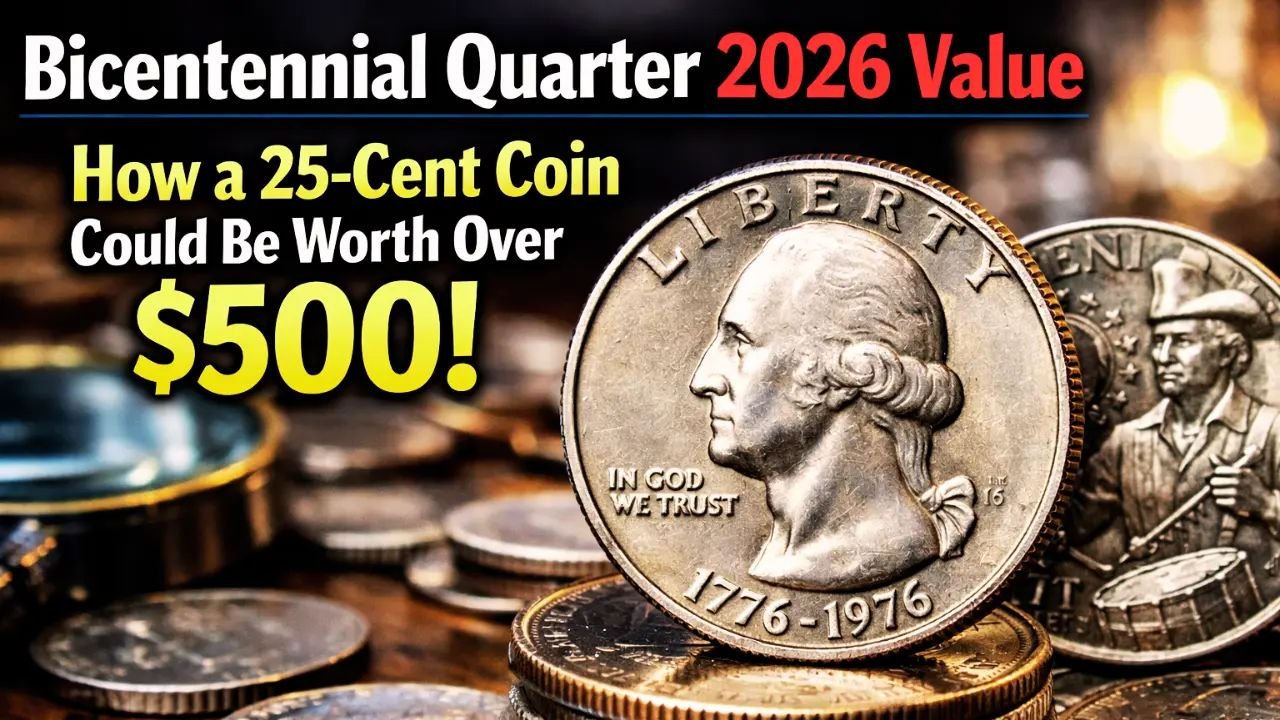
The 2026 Bicentennial Quarter has quickly become a focal point for coin collectors, history enthusiasts, and hobbyists across the United States. Marking the 250th anniversary of American independence, this special commemorative quarter will carry a face value of 25 cents but could command a significantly higher price depending on mintage, condition, and collector demand. With the U.S. Mint poised to release this historic coin, excitement is building for its potential as both a collectible and a long-term investment.
Historical Significance Drives Collector Interest
The 2026 Bicentennial Quarter celebrates a major milestone in U.S. history—250 years since the Declaration of Independence in 1776. Historical significance has consistently influenced collector behavior. The 1976 Bicentennial Quarter, for example, became highly prized due to its commemoration of America’s 200th anniversary. Collectors viewed it as both a memento and a long-term collectible, with some specimens now commanding hundreds of dollars. Similarly, the 2026 issue is expected to attract strong interest, as collectors and investors anticipate rising value over time.
Design Elements That Impact Value
A coin’s design plays a crucial role in its collectible appeal. While the official 2026 design has not yet been released, it is expected to feature iconic imagery related to the nation’s founding, including symbols of liberty, historical figures, or landmarks. Coins with intricate or aesthetically significant designs often command higher prices. Even subtle elements such as mint marks, edge lettering, or fine details can influence how much collectors are willing to pay above face value.
Condition and Grading
Condition is a major determinant of a coin’s value. Coins are graded on a scale from Poor (P-1) to Perfect Mint State (MS-70), with higher grades dramatically increasing market value. An MS-70 2026 Bicentennial Quarter, representing a flawless coin, could fetch hundreds of dollars, whereas lower-grade specimens will trade closer to face value. Professional grading services like PCGS or NGC provide authentication and numerical grading, offering buyers confidence in both condition and authenticity.
Circulation vs. Proof Coins
The 2026 Bicentennial Quarter is expected to be released in both circulation and proof versions. Proof coins are specially minted with mirror-like surfaces and sharp details, making them highly desirable to collectors. Historically, proof versions of commemorative quarters—such as the 1999–2008 State Quarters—have commanded significantly higher prices than their circulation counterparts. If the 2026 proof coins have limited mintage, their value could easily surpass the typical market range for standard coins.
Mintage and Rarity
Rarity is a key driver of collectible value. While millions of circulation coins can be minted, proof versions and special finishes are generally far more limited. Coins featuring mint errors, die cracks, double strikes, or misplaced mint marks can become even more valuable, attracting premium bids from collectors seeking unique pieces. The combination of low mintage and historical significance positions the 2026 quarter as a potentially high-value collectible.
Market Demand and Long-Term Appreciation
Collector demand heavily influences coin prices. Economic conditions, numismatic trends, and cultural interest in U.S. history all affect how much collectors are willing to pay. Coins commemorating major anniversaries have historically appreciated over decades, and early specimens often become the most sought after. While not every commemorative coin guarantees profit, scarcity, condition, and continued collector interest tend to support long-term value growth.
Estimated Value Ranges for the 2026 Bicentennial Quarter
| Condition / Type | Estimated Value Range (USD) |
|---|---|
| Circulated (common) | $0.25 – $2.50 |
| Uncirculated (MS60–MS63) | $5 – $15 |
| High-Grade Uncirculated | $20 – $75 |
| Proof Version | $30 – $150 |
| Perfect Proof (PR70) | $150 – $500+ |
These estimates are based on previous commemorative quarter releases. Actual market values will depend on collector activity once the coins are released and begin trading.
Investment vs. Hobby Perspective
Collectors purchase coins for two primary reasons: sentimental or educational value and investment potential. While investment-focused collectors emphasize grading, rarity, and resale value, hobbyists may prioritize historical significance or personal interest. The 2026 Bicentennial Quarter appeals to both groups, offering cultural significance as well as the potential for financial appreciation over time.
Future Outlook
The outlook for the 2026 Bicentennial Quarter remains optimistic. Coins marking major national milestones have historically retained collector interest and value. Early information on design, mintages, and initial market activity will help collectors better gauge value, but strong demand is anticipated from the outset. Many collectors are likely to seek early mint-condition specimens, driving secondary market activity in the months following release.
Final Thoughts
The Bicentennial Quarter 2026 is more than a 25-cent coin. Its value reflects historical significance, rarity, collector demand, and condition, making it a prized addition to any collection. While future market prices cannot be guaranteed, previous commemorative coins show that coins celebrating major anniversaries often become cherished collectibles. Whether approached as a hobby or an investment, this coin is set to become a significant piece of American numismatic history.