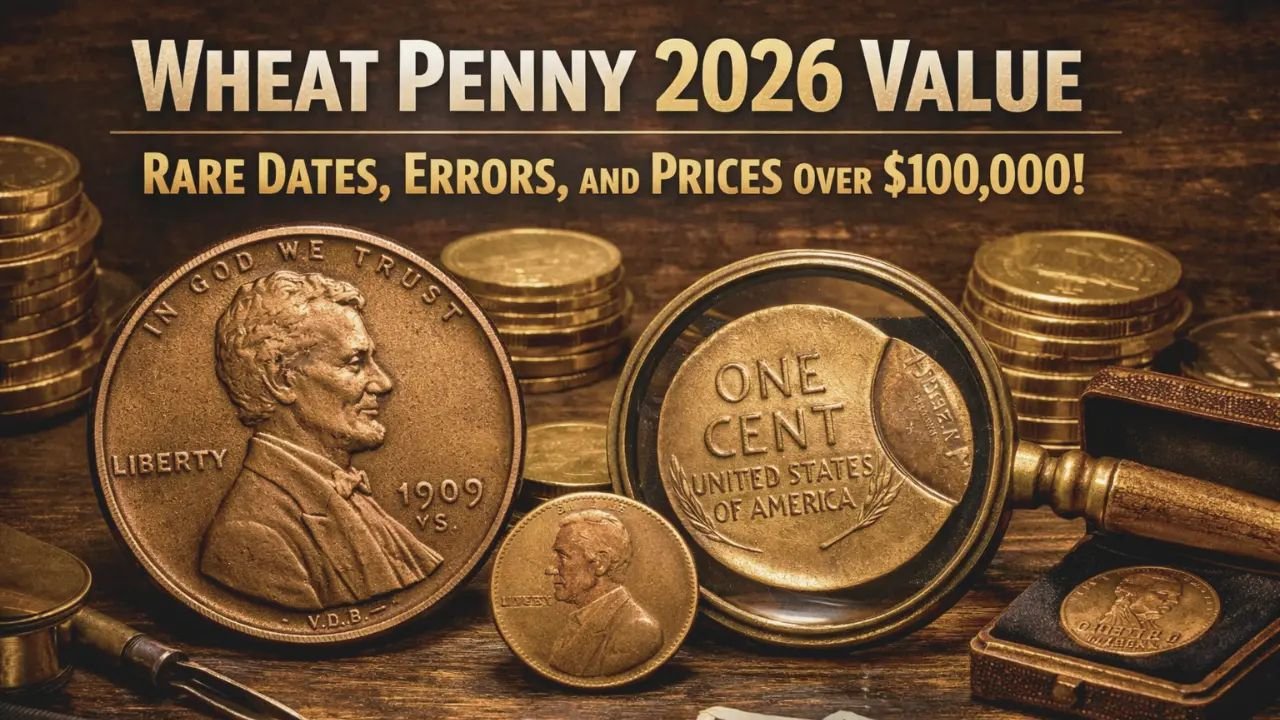
The 2026 Wheat Penny value continues to capture the attention of collectors and investors alike. Officially known as Lincoln Wheat Cents, these coins were minted from 1909 to 1958 and remain one of the most iconic and historically significant series in U.S. numismatics. Their enduring popularity stems from scarcity in high grades, historical relevance, and the continued fascination with early 20th-century coinage. Even decades after production ceased, certain Wheat Pennies command remarkable prices, with rare examples trading for over $100,000 in today’s market.
The Historical Significance of the Wheat Penny
The Wheat Penny debuted in 1909, marking the first time Abraham Lincoln appeared on a circulating U.S. coin. Victor David Brenner’s design features Lincoln’s profile on the obverse and the distinctive wheat stalks on the reverse. While early mintages were substantial, decades of circulation and natural wear have left many surviving examples in lower grades. This reduction in high-quality specimens is a key driver of the Wheat Penny’s collectible value in 2026.
Key Factors Influencing 2026 Values
Several factors determine the value of Wheat Pennies today: condition, rarity, date, mint mark, and historical context. Coins graded by professional services such as PCGS or NGC that reach MS65 or higher are particularly sought after. Certain mint marks, like “D” for Denver or “S” for San Francisco, can significantly boost value when paired with low mintage years. Market interest is further heightened by collectors seeking prestigious or historically significant issues.
Specific Dates and High-Value Examples
The 2026 Wheat Penny market shows a wide range of prices, depending on year and mint mark. Early issues, mid-century rarities, and notable errors dominate collector attention. The following table highlights notable examples and their estimated 2026 value ranges:
| Year & Mint Mark | Good (G4) | Uncirculated (MS60) | High Grade (MS65+) |
|---|---|---|---|
| 1909-S VDB | $900 | $3,500 | $75,000+ |
| 1914-D | $600 | $4,000 | $42,000 |
| 1922 No D | $150 | $2,700 | $80,000+ |
| 1931-S | $40 | $700 | $9,000 |
| 1955 Double Die | $200 | $1,000 | $12,000 |
| 1943 Copper (Error) | $4,000+ | $23,000+ | $120,000+ |
These figures illustrate the dramatic difference in value between common and rare dates, as well as the effect of professional grading and condition on pricing.
Errors, Varieties, and Their Impact
Errors and varieties have a substantial influence on Wheat Penny values. Coins with die cracks, off-center strikes, or doubled dies often command premiums far above standard issues. Famous examples include the 1955 doubled die obverse and the 1943 copper error, which occurred accidentally during wartime steel cent production. High-grade error coins frequently see intense bidding at auctions, sometimes exceeding traditional rarity values.
The Role of Grading
Professional grading remains critical in determining 2026 Wheat Penny values. Grading assesses strike quality, surface preservation, luster, and overall appeal. Coins certified as MS64 or higher often fetch multiple times the value of uncertified examples. As grading standards evolve, collectors increasingly rely on third-party authentication to ensure accuracy, legitimacy, and maximum market value.
Market Trends and Investment Potential
Wheat Penny values in 2026 are shaped by long-term numismatic trends and broader economic conditions. Increased participation in online auctions and the entrance of younger collectors have driven demand for rare dates and errors. While some collectors focus on hobbyist enjoyment, many view Wheat Pennies as alternative investments, particularly high-grade coins or notable errors. Historically, rare Wheat Pennies have outperformed common collectibles, emphasizing the importance of rarity, condition, and market awareness.
Common Misconceptions About Value
Many myths persist regarding Wheat Penny worth. A common misunderstanding is that all old coins are automatically valuable. In reality, most Wheat Pennies are only worth a few cents unless they are rare or in excellent condition. Another misconception is that coins heavily worn in circulation lose all value. While wear reduces value, key-date coins often retain substantial collector interest even in lower grades.
Auctions as a Value Benchmark
Auction results provide the clearest reflection of market value. High-profile sales of rare dates or premium-grade coins frequently establish new benchmarks. Auction houses specializing in numismatics offer detailed authentication and provenance documentation, which helps secure top prices. Collectors track these sales closely to adjust strategies for acquisition, sale, or investment.
Conclusion
The 2026 Wheat Penny value reflects a dynamic blend of history, rarity, collector demand, and market forces. While common coins trade near face value, exceptional dates, rare mint marks, and high-grade error coins can command extraordinary premiums. Whether pursued as a hobby or a strategic investment, Wheat Pennies remain a cornerstone of American numismatics, offering both historical fascination and financial potential. With proper knowledge of grading standards, rarity, and market trends, collectors can confidently navigate the 2026 landscape and secure some of the most coveted coins in U.S. history.