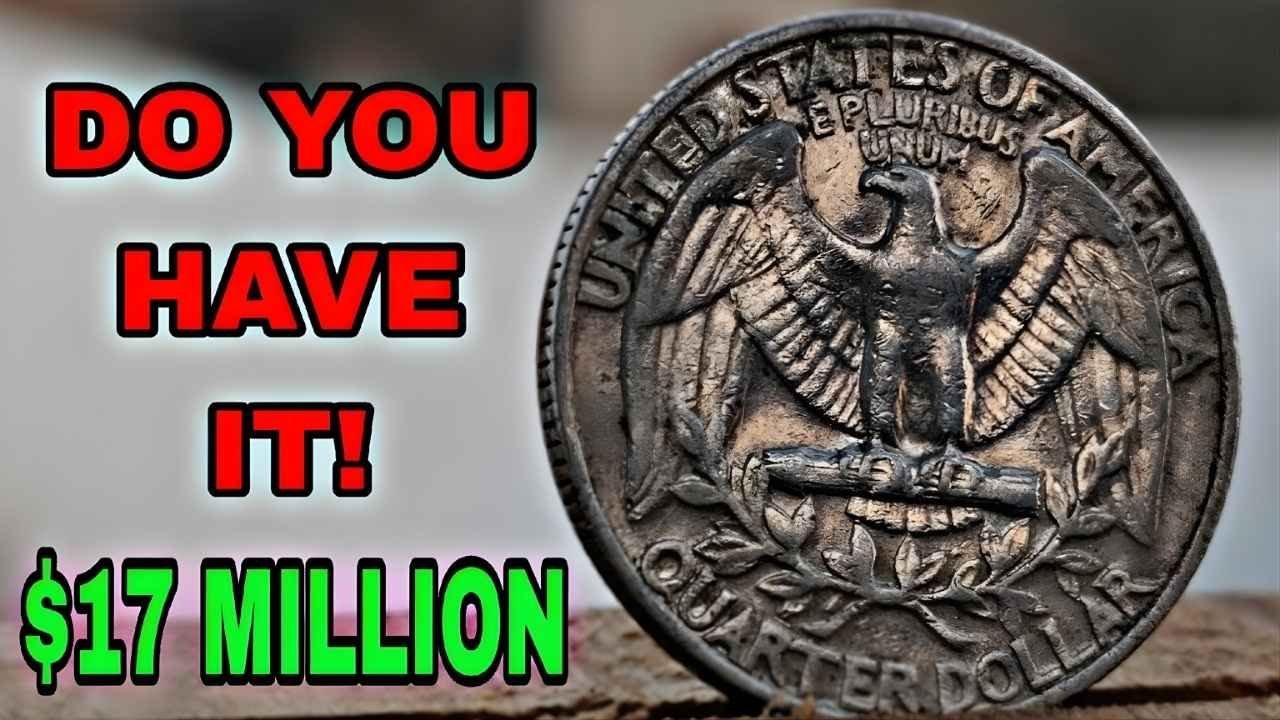
The Washington quarter has been a cornerstone of American coinage since its introduction in 1932, commemorating the 200th anniversary of George Washington’s birth. Sculpted by John Flanagan, the coin features Washington’s profile on the obverse and an eagle on the reverse. Over decades, the design has evolved, but the Washington quarter remains instantly recognizable. While most quarters are worth just twenty-five cents, select rare varieties, minting errors, and limited-production issues have made some coins worth thousands of dollars.
Why Certain Washington Quarters Are Valuable
Several factors determine a quarter’s worth. Scarcity, condition, historical significance, and unique minting errors can transform a standard coin into a collector’s treasure. Coins in pristine condition, especially those with unusual features or limited mintages, often command the highest premiums. Collectors prize Washington quarters that combine rarity with historical importance, making certain years highly sought after in the numismatic community.
The 1932-D and 1932-S Quarters
The 1932-D and 1932-S quarters are among the most famous and valuable in the series. Struck during the first year of issue, the Denver Mint produced roughly 436,000 coins, while San Francisco struck only about 408,000. These low-mintage coins are exceptionally rare in circulation, and high-grade examples can sell for thousands of dollars. Both coins represent key dates for serious collectors and are considered foundational pieces in Washington quarter collections.
The 1943 Doubled Die Quarter
Another highly prized rarity is the 1943 doubled die quarter. Caused by a misaligned die during striking, this error produces noticeable doubling in the date and lettering. Such mistakes are instantly recognizable to collectors and highly sought after. Depending on condition, a 1943 doubled die quarter can fetch thousands of dollars, making it a standout piece in any collection.
The 1950-D Over S Quarter
The 1950-D over S quarter is a fascinating minting anomaly, where a Denver “D” mintmark was struck over a San Francisco “S.” These overstrikes create a unique visual characteristic that collectors prize. High-grade examples of this coin have achieved impressive auction prices, demonstrating how even subtle details can dramatically enhance a coin’s value.
The 1964 Silver Quarters
Washington quarters struck before 1965 were composed of 90% silver, giving them intrinsic value beyond face value. The 1964 issue, the final year of silver quarters, remains particularly desirable. Proof and mint-state examples can be worth hundreds or even thousands of dollars, depending on condition. Silver content alone ensures these quarters remain appealing to both collectors and investors.
The 1970-S Proof Quarter Error
Modern rarities also exist. The 1970-S proof quarter error, struck on Canadian planchets, is one of the most intriguing contemporary examples. These misstrikes are extremely rare and have sold for thousands at auction. Such coins demonstrate that minting errors, even in modern years, continue to captivate collectors.
The 1976 Bicentennial Quarter
Released to celebrate America’s 200th anniversary, the 1976 Bicentennial quarter features a colonial drummer on the reverse and the dual date 1776–1976. While most examples are common, silver proofs and error varieties are significantly more valuable. Collectors prize these coins not only for their rarity but also for their historical significance and distinctive design.
Condition and Grading
A coin’s condition is critical in determining value. Washington quarters are graded on a scale from 1 to 70, with higher grades reflecting better preservation. Mint-state or proof-condition coins can be exponentially more valuable than the same coin showing wear. Professional grading services authenticate and evaluate coins, helping collectors understand their true market worth. For rare issues like the 1932-D or the 1943 doubled die, certification is essential to ensure value.
Auction Records and Collector Demand
Rare Washington quarters consistently draw high interest at auctions. The 1932-D and 1932-S have commanded extraordinary prices, while the 1943 doubled die and 1950-D over S quarters also attract intense competition. Auction results underscore the demand for these coins and highlight their investment potential. Collectors are willing to pay premiums for verified examples in top condition.
How to Identify Valuable Quarters
Start by examining the date and mintmark. Look for unusual traits such as doubling, overstrikes, or missing elements. Key years include 1932, 1943, 1950, 1964, 1970, and 1976. Using magnification and comparing your coin to images of known errors can help identify potential treasures. Professional appraisal or grading can confirm authenticity and ensure accurate valuation.
Where to Find Rare Quarters
Valuable quarters often surface in unexpected places. Coin jars, inherited collections, or even daily pocket change can occasionally reveal hidden gems. While finding a thousand-dollar quarter in circulation is rare, it is not impossible. Bank coin rolls, proof sets, and auction catalogs are additional sources for acquiring rare Washington quarters.
Preserving and Protecting Your Coins
Proper storage is vital. Keep coins in protective holders to prevent scratches or tarnish and avoid cleaning, which can reduce value. Consulting professional coin dealers or grading services ensures authenticity and helps maintain long-term worth. Preserved correctly, a rare quarter can hold or increase its value for decades.
The Thrill of Coin Collecting
Part of the appeal of coin collecting lies in the excitement of discovery. Even if a rare Washington quarter never crosses your path, the hobby offers history, artistry, and community. Each coin tells a story, adding depth and meaning to the pursuit.
Conclusion
The Washington quarter is more than currency; it is a piece of history and, in rare cases, a treasure worth thousands. From the legendary 1932-D and 1932-S to the 1943 doubled die, the 1950-D over S, and beyond, these coins captivate collectors in 2026. Whether searching through pocket change or exploring auction catalogs, the chance of uncovering a valuable quarter adds enduring excitement to the hobby of coin collecting. Even the smallest denomination can hold extraordinary value.