Pennies are often dismissed as insignificant, overlooked at the bottom of wallets or forgotten in jars. Yet in the world of coin collecting, the humble one-cent coin can carry extraordinary value. Certain rare pennies have sold for staggering sums, with headline-grabbing valuations reaching as high as $989,000. These remarkable prices are not accidents. They are the result of rarity, historical importance, minting errors, and exceptional preservation. For collectors, valuable pennies represent both a financial opportunity and a tangible connection to American history.
The Origin and Legacy of the Lincoln Penny
The Lincoln penny was introduced in 1909 to commemorate the 100th anniversary of President Abraham Lincoln’s birth. It marked a turning point in U.S. coinage, becoming the first regularly circulating American coin to feature a real historical figure rather than an allegorical image. Designed by Victor David Brenner, the original coin carried his initials, VDB, on the reverse. Public controversy over the prominence of these initials led to their removal, unintentionally creating one of the most famous rare coins in American history.
Over the decades, the Lincoln penny evolved in both design and composition. Changes in metal content during wartime, adjustments to minting techniques, and design updates all contributed to a wide variety of collectible versions. Today, the Lincoln penny is one of the most extensively studied and collected coin series in the world.
Why Some Pennies Are Worth Nearly a Million Dollars
Not all old pennies are valuable, but certain characteristics can dramatically increase a coin’s worth. Rarity is the most powerful factor. Coins struck in limited quantities, or those that survived in small numbers, naturally command higher prices. Condition is equally critical. A penny preserved in near-perfect condition can be worth exponentially more than the same coin with heavy wear.
Historical context also matters. Pennies produced during pivotal moments, such as wartime metal shortages, often carry additional value. Finally, collector demand drives prices higher, especially for coins that are widely recognized as key dates or iconic errors.
Legendary Pennies That Changed the Market
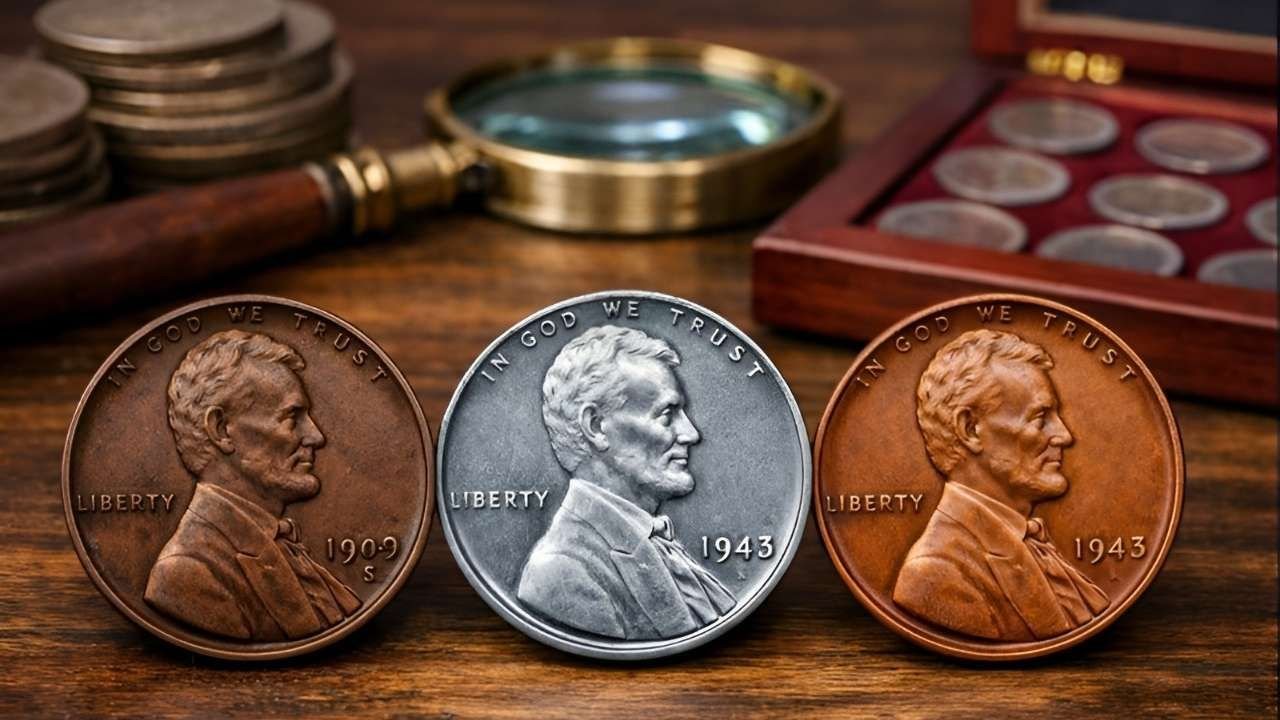
Several pennies have achieved legendary status among collectors. The 1909-S VDB Lincoln penny is one of the most famous, struck in limited numbers at the San Francisco Mint before the designer’s initials were removed. Its scarcity and historical backstory make it a cornerstone of serious collections.
Another standout is the 1943 copper penny. During World War II, pennies were supposed to be struck in steel to conserve copper for military use. A small number were mistakenly minted in copper, creating one of the rarest and most valuable error coins in U.S. history.
The 1955 doubled die penny is equally iconic. A misalignment during the minting process resulted in dramatic doubling of the lettering, easily visible to the naked eye. This error transformed an ordinary cent into a highly desirable collectible worth tens of thousands of dollars in top condition.
Understanding the $989,000 Valuation
Stories of pennies worth $989,000 often capture public attention, but they require careful interpretation. Such valuations are typically tied to specific coins sold at major auctions under exceptional circumstances. Factors such as pristine condition, rarity, and verified authenticity all play a role.
While not every rare penny will approach this figure, the existence of such sales underscores the potential value hidden within the cent denomination. These stories also highlight the importance of professional grading and authentication. Without expert verification, even genuinely rare coins may fail to reach their true market potential.
The Power of Mint Marks
Mint marks are small letters that indicate where a coin was produced, and they can significantly affect value. For Lincoln pennies, the most common mint marks are D for Denver, S for San Francisco, and no mark for Philadelphia. Coins from certain mints in specific years were produced in lower quantities, making them far scarcer.
For example, a penny minted in San Francisco during a low-production year can be far more valuable than the same year’s coin from Philadelphia. Experienced collectors pay close attention to these details, as mint marks often separate ordinary coins from highly prized examples.
Mint Errors and Their Impact on Value
Mint errors are among the most fascinating aspects of penny collecting. These errors occur when something goes wrong during the striking process, resulting in unusual characteristics such as doubled images, off-center strikes, or incorrect metal compositions.
Error pennies are especially desirable because they are often unique or extremely limited in number. When verified, these coins can command impressive prices. Some of the most valuable pennies ever sold owe their status to dramatic and easily identifiable minting errors.
Key Dates Every Collector Should Recognize
Certain years stand out as essential knowledge for anyone serious about collecting pennies. Among the most important are the 1909-S VDB, 1914-D, 1922 no-D, 1931-S, 1943 copper, and 1955 doubled die. These coins are widely recognized as key dates, and their value increases substantially with better condition.
Even circulated examples of these pennies can be worth hundreds or thousands of dollars. High-grade specimens, especially those certified by professional grading services, can reach extraordinary valuations.
Condition, Grading, and Professional Certification
Condition plays a decisive role in determining a penny’s worth. Coins are graded on a standardized scale that evaluates wear, surface quality, and overall appearance. Small differences in grade can translate into large differences in value.
Professional grading services provide independent verification of authenticity and condition. Certified coins inspire confidence among buyers and often sell for significantly higher prices than uncertified examples. For high-value pennies, professional grading is not optional; it is essential.
Strategies for Collecting Valuable Pennies
Collectors approach penny collecting in different ways. Some aim to build complete sets by year and mint mark, while others focus on acquiring key dates or rare errors. Beginners often start by examining everyday change, while advanced collectors participate in auctions, estate sales, and specialized coin shows.
Successful collecting requires patience, research, and a willingness to learn. Understanding market trends and recognizing genuine rarity can prevent costly mistakes and increase long-term rewards.
The Market Outlook for Rare Pennies
The market for rare pennies remains strong, supported by steady collector demand and limited supply. Online platforms have expanded access to global buyers, while major auctions continue to set record prices for exceptional coins.
As interest in tangible assets and historical collectibles grows, rare pennies are likely to maintain their appeal. High-quality, well-documented coins are particularly well positioned in the current market environment.
Conclusion
The idea of a penny worth $989,000 may sound unbelievable, yet it reflects the remarkable realities of rare coin collecting. Pennies are far more than small change. They are artifacts of history, craftsmanship, and economic evolution. While not every old penny holds great value, understanding rarity, mint marks, condition, and historical context can reveal extraordinary opportunities. For collectors, the pursuit of valuable pennies is not just about financial gain. It is about discovery, heritage, and the enduring thrill of finding something truly rare in the most unexpected places.