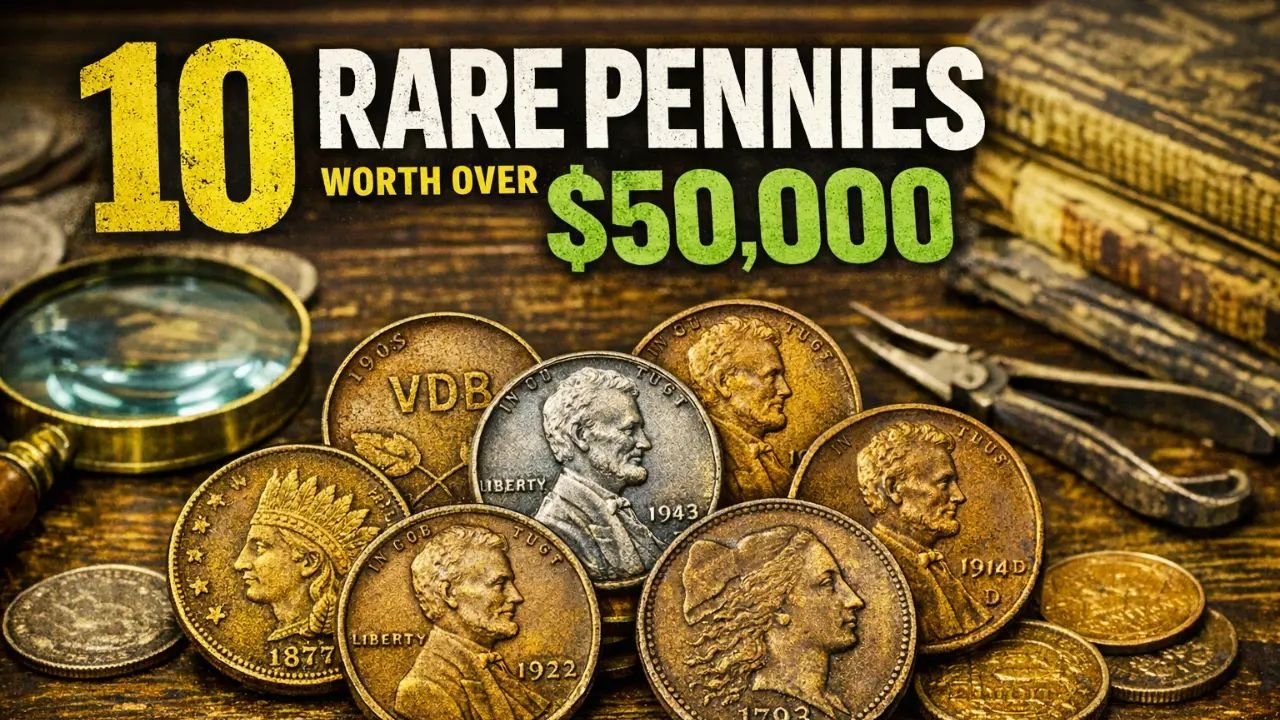
In the world of numismatics, some pennies transcend their humble face value, becoming extraordinary collectibles worth tens of thousands of dollars. Rare U.S. pennies, particularly Lincoln cents and early American coins, have sold for more than luxury vehicles and even houses. Their value stems not from metal content but from scarcity, condition, historical significance, and collector demand. Many of these coins were accidentally minted, making surviving examples highly prized.
Why Some Pennies Command High Prices
Several factors contribute to the exceptional value of rare pennies:
- Rarity: Coins struck in extremely limited numbers naturally attract collectors.
- Mint Errors: Misprints, double strikes, and off-metal planchets create one-of-a-kind coins.
- Historical Significance: Early U.S. pennies and special editions carry historical narratives that enhance desirability.
- Condition: Well-preserved coins, often graded by professional services, can be worth ten or even a hundred times more than worn counterparts.
Auction records show that top-grade rare pennies regularly surpass $50,000, while elite specimens, particularly those with notable errors or historic provenance, can exceed $500,000.
The Role of Mint Errors
Minting mistakes are among the primary drivers of value in the rare penny market. Examples include:
- Double Dies: Where dates or letters appear doubled on the coin.
- Off-Metal Planchets: Coins struck on the wrong metal, such as copper pennies accidentally struck on steel during wartime.
- Die Doubling or Misalignment: Subtle yet highly sought-after errors that collectors prize.
Because modern minting is automated and tightly controlled, major errors are exceedingly rare, making them highly valuable. Coins with significant errors can sell for more than 100,000 times their face value.
Historical Pennies and Collecting Significance
Some pennies are valuable not due to errors, but because of their age and historical importance. Early American coins, such as 18th- and early 19th-century cents, were produced in small quantities and widely circulated, leaving very few surviving examples in good condition. These coins are cornerstones of U.S. currency history, and their rarity ensures values often exceed $50,000, even without minting mistakes.
Record-Breaking Penny Auction Prices
Over the decades, major auction houses have documented six-figure penny sales consistently. Rare cents have sold for amounts ranging from $60,000 to over $1.7 million, depending on condition and provenance. Such sales demonstrate the robustness of the rare penny market, which continues to attract high-net-worth collectors worldwide.
Top 10 Rare Pennies Worth Over $50,000
| Penny Name | Year | Key Feature | Estimated Value |
|---|---|---|---|
| Lincoln Wheat Penny (Copper Error) | 1943 | Struck on copper instead of steel | $100,000 – $1,000,000 |
| Lincoln Penny (Steel Error) | 1944 | Struck on steel instead of copper | $75,000 – $500,000 |
| Doubled Die Lincoln Cent | 1955 | Strong doubling on date and lettering | $50,000 – $125,000 |
| Aluminum Lincoln Penny | 1974 | Experimental aluminum planchet | $75,000 – $250,000 |
| Lincoln Penny (Bronze Error) | 1943-D | Bronze instead of steel | $200,000+ |
| Indian Head Penny | 1877 | Low mintage year | $60,000 – $150,000 |
| Lincoln Penny (Double Die Reverse) | 1969-S | Dramatic doubling on reverse | $50,000 – $100,000 |
| Lincoln Penny (No Mint Mark Proof) | 1990-S | Missing mint mark | $50,000 – $75,000 |
| Large Cent | 1793 | First year U.S. penny | $80,000 – $500,000 |
| Lincoln Penny (Copper Error) | 1943-S | Copper planchet error | $150,000+ |
Why Condition Matters
Condition plays a decisive role in a penny’s value. Coins are graded from poor to mint state, with high-grade coins commanding exponentially higher prices. For instance, a 1955 Doubled Die penny in circulated condition might sell for $1,500, while a mint-state example can exceed $100,000. Preservation is key, and grading provides buyers confidence in authenticity and quality.
Supply and Demand Dynamics
Many rare pennies exist in quantities fewer than 20 confirmed pieces. With thousands of collectors vying for ownership, the imbalance between supply and demand keeps prices high and relatively stable. Even during economic downturns, top-tier rare pennies often retain value better than traditional investments, making them a reliable collectible asset.
Long-Term Value Growth
Historical data shows that rare U.S. pennies have appreciated 7% to 12% annually over the past several decades. Certified coins with documented provenance often outperform these averages. Growing collector interest, global demand, and the tangible nature of coins as assets contribute to steady long-term value growth.
Authentication Protects Investment
Professional grading by organizations such as PCGS or NGC ensures coins are genuine and accurately evaluated. Certified coins often sell for 20% to 40% more than uncertified examples, providing security and transparency for collectors and investors alike.
Why Rare Pennies Are Strong Collectible Assets
Rare pennies are physical, historically significant, and limited in number. Unlike stocks or digital assets, they cannot be duplicated, ensuring scarcity and persistent collector demand. Once a rare penny enters a private collection, it may remain off the market for decades, enhancing its long-term value and desirability.
Final Words
The top ten rare pennies worth over $50,000 highlight how even the smallest coin can carry immense historical and financial value. These coins are not myths—they are documented collectibles validated by auction records and professional grading. For collectors, enthusiasts, and investors, each rare penny represents a tangible piece of U.S. history, combining scarcity, craftsmanship, and enduring market demand.